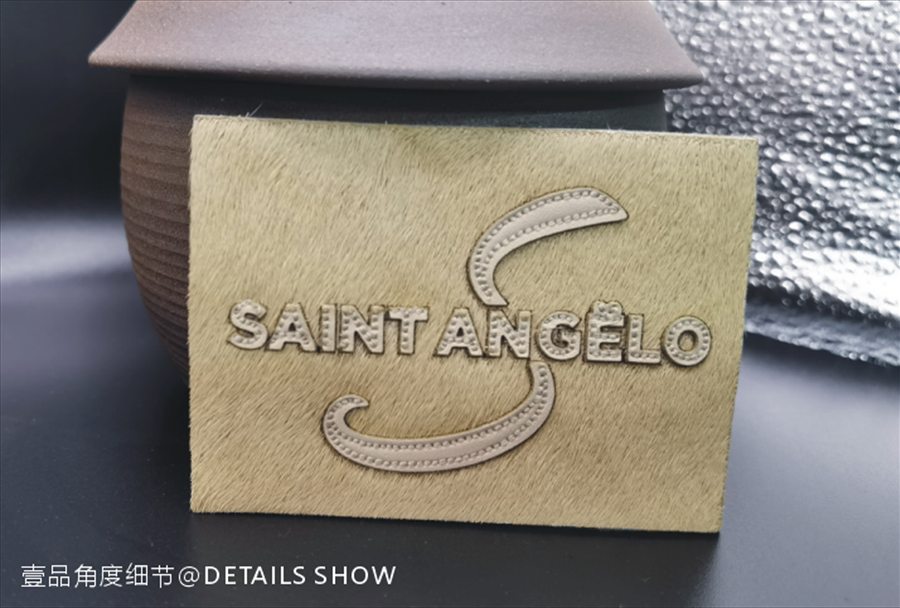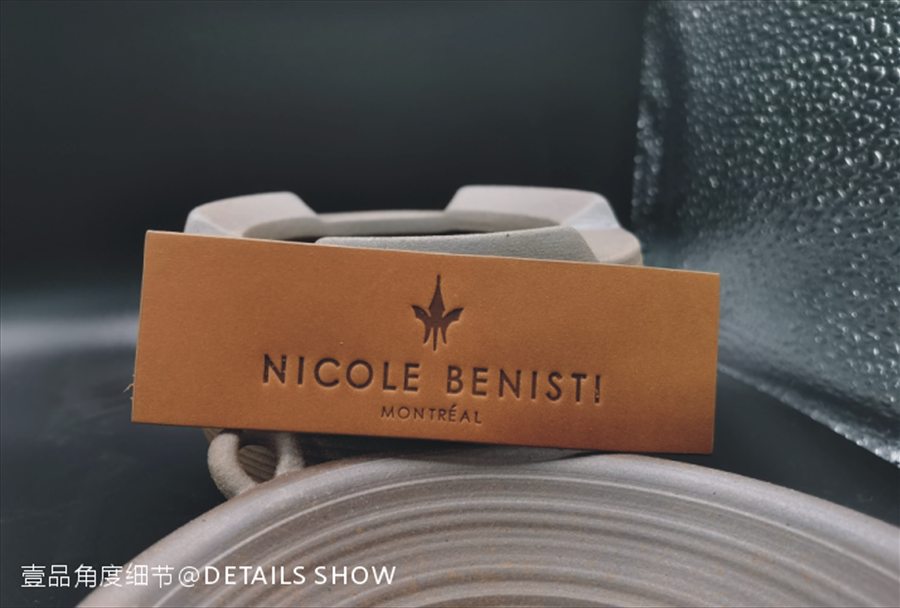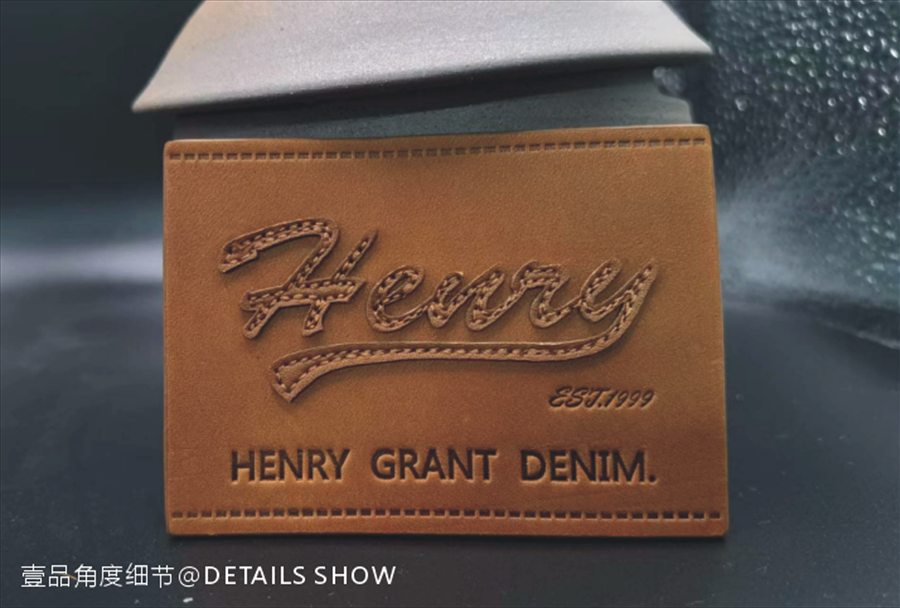
HENRY GRANT
HENRY GRANT cowhide appliqué patch with embroidered lettering
- Product No.
- R002033
- Classification
- Cowhide appliqué and embroidery
Putting thread onto leather adds a layer of relief and hand feel that print or foil cannot.
An embroidered leather patch carries thread lettering or artwork on a leather base, built flat, as raised lettering, or in several layers. Leather is not like fabric — it does not absorb the needle and it holds every perforation — so stitch pitch, bobbin tension and the reinforcing layer matter more. EP TRIM makes embroidered leather badges and horsehair appliqué patches for apparel brands, with threads matched to Pantone or the client's own thread card.
Unlike cloth, leather does not close up behind the needle — every stitch is a permanent hole. Pitch set too tight cuts a tear line into the face; tension set too high buckles or stretches it. So we fix the stitch pitch and the run direction at layout stage, add a reinforcing layer on the reverse to spread the stress, and after stitching trim loose threads by hand and press the edge flat.
Choose embroidery when the mark needs physical thickness, more than one colour, a gradient, or when it is artwork rather than plain lettering. Foil is better for single-colour text where cost and sharpness matter. The two can combine — embroidered lettering inside a foiled border, for example.
Much of what is sold as a custom embroidered patch is a cloth badge, a sports-team emblem or an iron-on letter patch — those are outside our lines. We do not make cloth badges or licensed team emblems. What we make is embroidered leather badges and horsehair appliqué patches. If what you need is a cloth badge, we will say so rather than keep you waiting.
Yes, and they are permanent — that is the nature of leather. We keep the perforations inside the area the thread covers, run stitches along the direction of the artwork, and reinforce the reverse so the holes do not become tear starters. You can judge the result on a physical sample.
No. We only make embroidered and appliqué patches on a leather base, including horsehair. Cloth badges, woven labels and licensed team emblems need a specialist embroiderer, and we will say so before sampling rather than waste your time.
Yes — to a Pantone reference or your own thread card. One caveat: thread reads differently on a leather face depending on light and stitch density, so we recommend confirming on a physical sample rather than a screen colour value.
It depends on letter size and stitch density. Larger lettering can be given clear relief; at small sizes the effect is limited and embossing or foil gives a cleaner result. We set out the practical range at layout stage.
Thread and leather shrink at different rates, so an aggressive wash can pucker the stitching or lift it. If the product is heavily washed, run a trial first and consider attaching the patch after the wash.
Yes. Sampling is its own operation: you confirm feel, colour and construction before deciding on volume. Sampling cost and lead time follow the complexity of the design.
HENRY GRANT
SAINT ANGELO
Materials
A natural full-grain face is not uniform the way synthetic leather is. Wrinkles, scars, insect marks and uneven grain are all normal.
Materials
In trade naming, full-grain cowhide is always called “cowhide leather”, and split cowhide is always called “split cowhide leather”. Both may be described as genuine leather, but their structure and durability are not the same.
Use & washing
Any patch going onto a garment that will be heavily washed must be trial-run first, and bright-coloured patches must not be paired with pale fabric because of colour bleed.
Send us your layout or a physical sample. We will come back with a proposed process and sampling lead time before we talk volumes.